
Most electric tricycles earn their keep as utility vehicles, farm loads, market runs, delivery routes. But the three-wheeler boom created a second, very different buyer: operators who need the vehicle to look like something a guest wants to photograph. Retro and fashion electric tricycles are now a distinct export category, built on the exact same platform as a work trike, the same 800–1200W hub motor, the same 60V or 72V pack, the same delta chassis, with a finish package layered on top for resorts, beach towns, brand activations, and lifestyle buyers.
This guide covers the trend, who actually orders these units, where retro and modern styling diverge, the platform engineering that does not change when you add chrome, and how OEM customization of paint, upholstery, and trim works when you commission a fashion line.
Why the Fashion Tricycle Segment Exists
The demand signal is concrete: importers searching for "fashionable tricycles" from Chinese factories have been climbing through 2026, riding the same wave documented in our why Americans love the e-tricycle analysis. Three forces push the style-led segment:
- Familiarity . The utility trike became a known object in Western markets, so buyers now differentiate on looks the way they do with scooters or vintage cars.
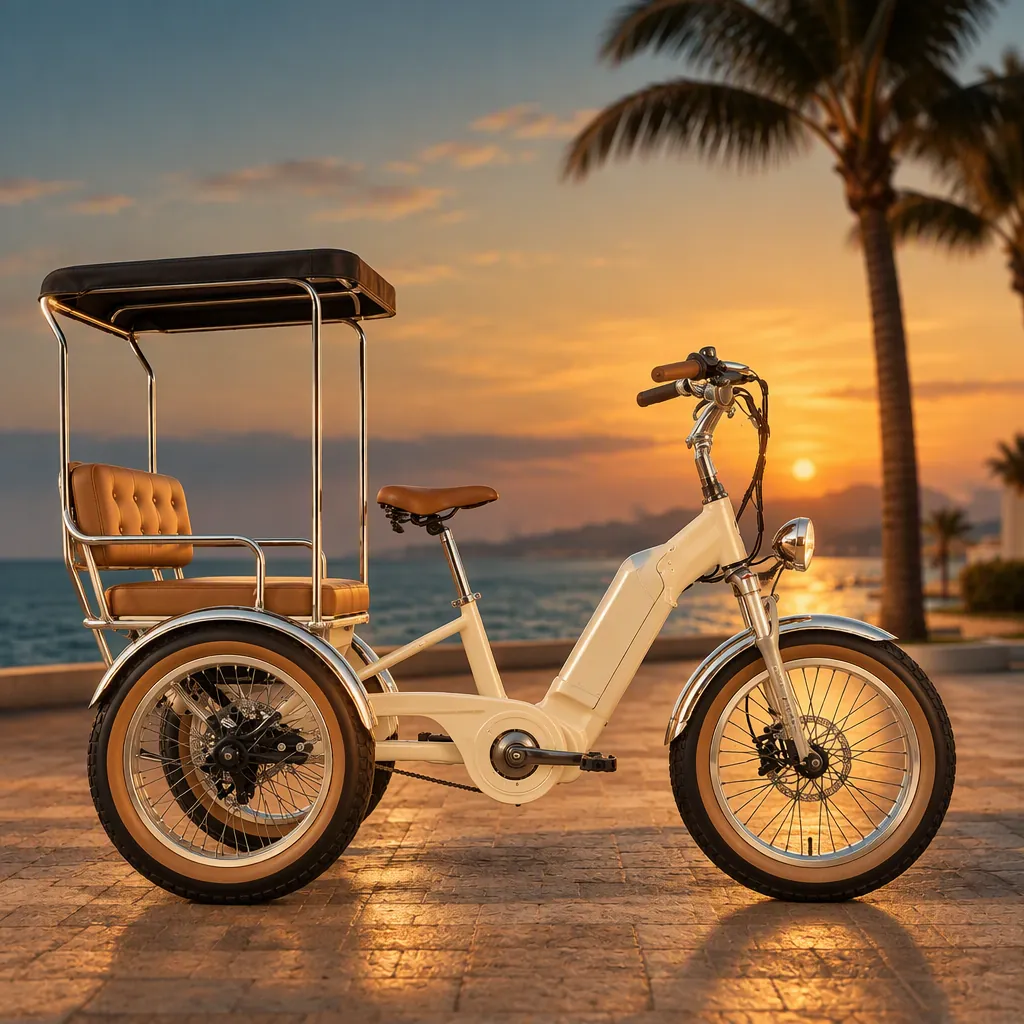
- Experience economy . Resorts, beach towns, and event venues need vehicles that appear in guest photos. A pastel trike is marketing on wheels, and the unit pays for itself in brand exposure before it pays for itself in fares.
- Retro revival, 1950s scooter and delivery-bike aesthetics (curves, chrome, two-tone paint) carry strong nostalgia value in the US and Europe, and they photograph exceptionally well.
The important point for buyers: the style wave sits on top of a platform that is already proven in the utility market. This is an OEM customization story, not a new engineering story. Which is exactly why it is affordable to enter.
Who Orders Fashion Trikes
These buyers order smaller volumes than utility fleets but at higher unit prices, and they reorder when a season proves the concept, a profile that suits OEM customization well:
- Hotels and resorts . Guest shuttles, luggage runs, and property tours in a vehicle guests want to photograph. The hospitality rental model is covered in our tourism rental guide.
- Beach and cruise-port towns . Hourly rentals where the trike itself is the attraction. The operator economics of short-hire fleets are in our taxi and shuttle guide.
- Boutique rental and event companies . Weddings, brand activations, and photo production where vehicles are set dressing. The passenger platform these builds start from is specced in our passenger trike guide.
What all three have in common is that appearance is part of the product they sell. They are not buying transport capacity. They are buying an object that shows up in someone else's photographs.
What Actually Makes a Tricycle "Fashion"
Under the paint, a fashion trike is the standard passenger platform. What changes is the finish package. And knowing which items are cosmetic versus structural is what separates a confident order from an expensive one:
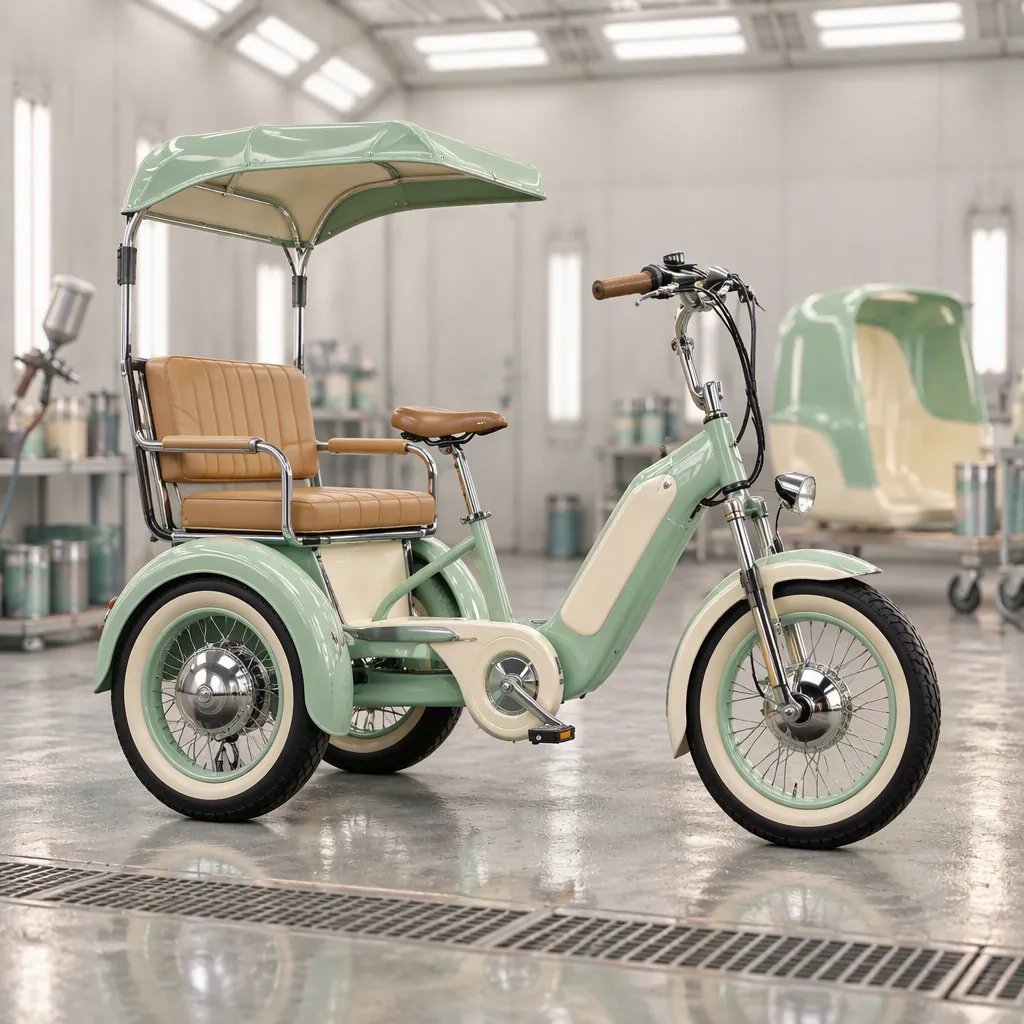
- Colorways . Pastel, matte, and duotone schemes in 2K automotive paint or powder coat. Pantone matching is the norm for brand-led orders and requires a sample-approval cycle before production.
- Seats . Leatherette bench seats with two-tone stitching and chrome or brass accents replace the standard saddle. This is the single highest-visibility upgrade, because riders touch it every trip.
- Trim . Chrome fenders, round headlights with halo rings, woven baskets, mirrors, and period-correct details that create the retro silhouette.
- Accessories . Canopy options, flower boxes, and branded side panels that turn the trike into a mobile billboard. The canopy retrofit logic is in our canopy guide.
The line between "customized cargo trike" and "fashion trike" is precisely this finish package. Which is why the OEM conversation is about paint, upholstery, and trim, and almost never about the chassis or drivetrain.
Retro vs Modern-Styled Trikes
Two style directions dominate orders, and they target different markets. Getting this decision wrong at the sample stage is the most common reason a first fashion batch underperforms:
| Design element | Retro (vintage) | Modern (urban) |
|---|---|---|
| Body lines | Curves, rounded fenders | Angular panels, flat decks |
| Trim | Chrome, brass, cream | Matte black, brushed aluminum |
| Lighting | Round halo headlight | LED strips, signature DRL |
| Seat | Leatherette bench, two-tone | Sport saddle, monochrome |
| Colors | Pastel, cream, two-tone | Matte grey, black, accent color |
| Best markets | Resorts, events, lifestyle | City fleets, rentals, branding |
Some operators run both: retro units for guest-facing service and modern units for delivery and utility duty in the same fleet. The one thing both directions share is that the safety and lighting hardware cannot be traded for looks. The reflectors and visibility items that styled builds sometimes under-spec are covered in our safety features guide.
The Engineering Under the Style
A fashion trike is still a real vehicle, and the platform specs do not shrink because the paint is pretty. These are the numbers to hold your supplier to, whether the body is cream or matte black:
| System | Platform spec | What it means for fashion duty |
|---|---|---|
| Motor | 800W / 1000W / 1200W brushless hub with differential | Enough torque for two passengers plus luggage on resort paths; sizing logic in our motor power guide |
| Battery | 60V 32Ah NMC (1.92 kWh) standard; 72V 40Ah LFP (2.88 kWh) heavy duty | Trade-offs in our 60V vs 72V guide |
| Range & speed | 50–80 km per charge at 25–35 km/h | Covers a full day of hourly rental turns without mid-day charging |
| Payload | 300 kg (EU) / 500 kg (non-EU) | Two passengers plus luggage stays comfortably inside class |
| Brakes | Hydraulic disc front, dual drum rear, parking brake | Sizing rules in our brake systems guide |
| Wheels & tyres | 3.00-12 front, 3.75-12 rear pair | Fat footprint for cobblestone promenades and loose beach approaches |
| Charge time | 6–10 hours at 5A | Overnight charge fits the rental turnarounds |
| Unladen weight | 150–220 kg | Matters for trailer transport between venues |
The practical point for buyers: a styled trike with weak brakes or a soft frame fails as a brand vehicle faster than as a machine, guests notice the ride before they notice the paint. Payload capacity is a system limit shared by frame, axle set, motor, and brakes, not a single number to negotiate; the full breakdown is in our payload capacity guide.
OEM Customization: Paint, Upholstery, and Trim
Fashion trike orders are where OEM customization matters most, and the process has specific realities worth planning around:
- Paint systems, 2K automotive paint for gloss and depth, or powder coat for durability. Custom Pantone matching adds a sample-approval cycle before production starts, so budget that time into your season launch.
- Upholstery . Leatherette, color, and stitching are specified by sample. Confirm UV resistance for open-air fleet use, because seat covers are the first thing that fades in a sun-exposed fleet.
- Trim and decals . Chrome parts, mirror shapes, and logo placement are all configurable. Decal quality is a durability item, not just a look item.
- MOQ reality . Standard-platform orders run from 50 units, but custom paint lines and bespoke upholstery typically start at 50–100 units per colorway. A first custom batch is 30–45 days including samples.
Standard lead time on a stock-configuration order is 15–30 days; custom-branded first orders extend to 30–45 days. The full OEM process, tooling, samples, third-party inspection, deposit structure, is documented in our cargo trike OEM guide.
Operators who want to test a market without committing to custom paint often start with standard-color units and add decals locally, the same staged approach vending operators use when they style their carts, covered in our mobile vending guide. Component-level customization is a separate axis: if you want branded instruments or a specific charger profile instead of a decal, that is specified per component rather than per body panel.
Where Fashion Trikes Earn: Hospitality and Rental Economics
The revenue model that justifies a fashion trike purchase is what makes the styling package defensible as a line item rather than a vanity expense:
- Hourly rental . Beach and resort operators price retro trikes at $25–40/hour, with 4–6 rental turns per day in season. The utilization math is in our tourism rental guide.
- Guest shuttle value . A styled trike doing property tours replaces a golf-cart shuttle with something guests photograph. The comparison is in our trike vs golf cart guide.
- Fleet charging . Rental duty means predictable overnight charging and fast turnaround. The infrastructure plan is in our fleet charging guide.
Because fashion trikes are bought for revenue-generating guest-facing use, operators usually finance them through the same channels as any fleet vehicle, the options are laid out in our fleet financing guide. And because rental units accumulate hours fast, budget for the consumable schedule early: the maintenance intervals are in our maintenance guide, and the parts pipeline that keeps a seasonal fleet running is in our after-sales and spare parts guide.
Compliance for Styled Trikes
Styling never changes the legal class, and buyers should plan certification before they plan paint:
- US . A 750W, 20 mph fashion trike with pedals stays a Class 2 e-bike in most states, with no licence or registration required. The state-by-state position is tracked in our US and EU regulation guide.
- EU . A 250W EPAC build stays under EN 15194; faster or passenger-carrying builds move into L2e/L5e territory with eMark type-approval. The certification matrix is in our EU vs US certification guide.
- Insurance and registration . Styled trikes used for commercial rental or shuttle duty face commercial-use insurance and, in some jurisdictions, operating licences. The requirements are in our insurance and registration guide.
One styling-specific note: custom lighting and chrome trim must still meet reflector and visibility requirements. A halo headlight is a styling choice; the reflectors around it are a compliance item.
Spec a Fashion Trike Line
A working starting spec for a resort fashion fleet: passenger platform, 1000W brushless hub with differential, 60V 32Ah pack, 300 kg payload, pastel two-tone 2K paint with Pantone matching, leatherette bench seats with UV-resistant covers, chrome trim, round halo headlights, and a 30–45 day custom-batch lead time. At $1,250–1,550 FOB for the base build plus a styling package, the unit lands at a fraction of the cost of a vintage-style conversion of a gas vehicle. And it is street-legal as an e-bike in most markets.
Tell us your target market, style direction, and volume. We will spec the platform, paint system, upholstery, trim package, and certification for your fashion trike line.
Spec a Fashion Trike Line
Tell us your target market, style direction, and volume. We will spec the platform, paint system, upholstery, trim package, and certification for your fashion trike line.
