
The motor is the first specification a cargo e-tricycle buyer asks about, and the one most often misunderstood. On a two-wheeler, a watt figure is largely a marketing number bounded by a legal ceiling. On a cargo trike it decides whether the vehicle can actually move a full box up a loading ramp, hold route speed all shift, and still be serviceable in year five. The export market is built around three ratings — 800W, 1000W and 1200W — and the difference between them is not “more power is better.” It is a trade-off between hill-climb torque, controller current, battery pairing and, in several markets, the regulatory class the whole vehicle falls into.
This guide explains what each rating actually buys, what it costs, and how to match a rating to your route profile and payload. Every figure below comes from the platform we build, so you can check the arithmetic against the vehicles themselves rather than against a catalogue claim.
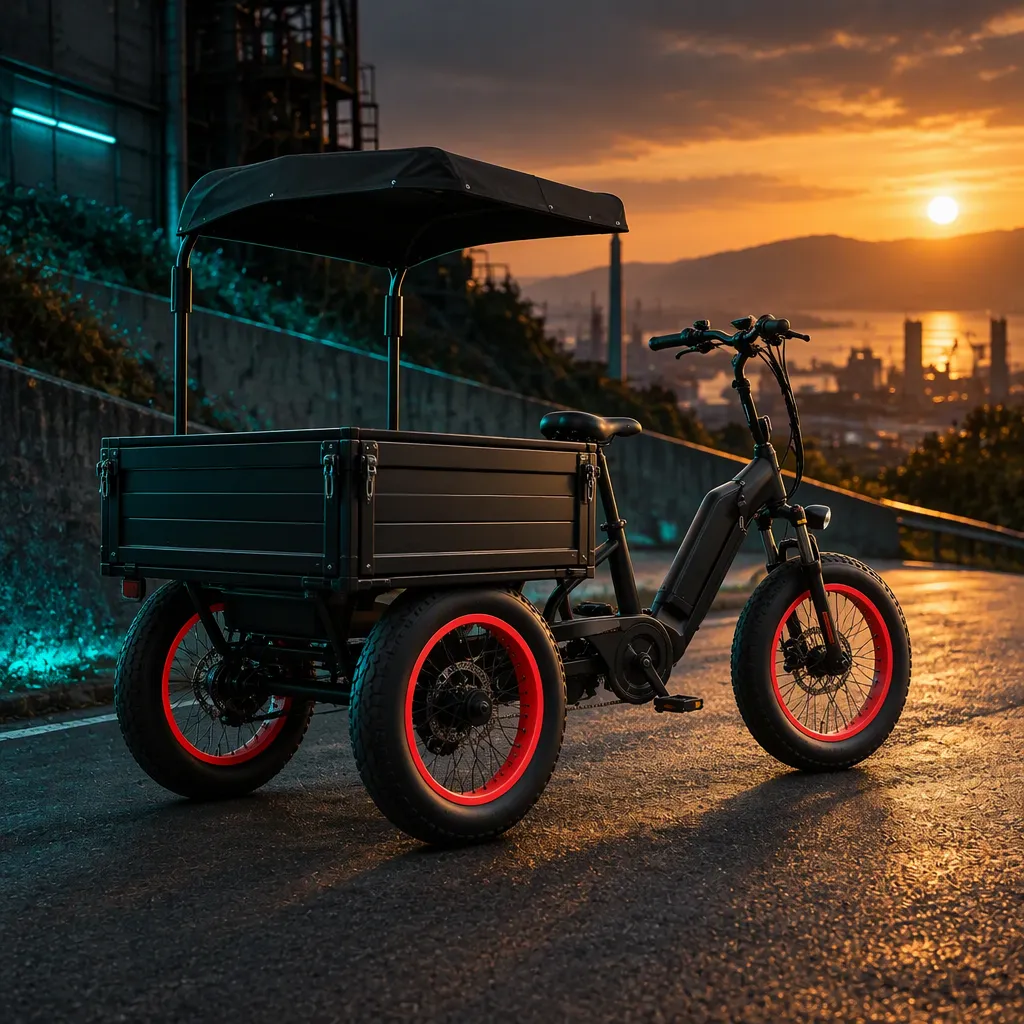
How Motor Ratings Work on a Cargo Tricycle
A cargo trike motor rating describes the continuous power the hub can sustain without overheating — not a momentary burst. On our cargo platform the same brushless hub assembly is offered at 800W, 1000W or 1200W, running on 60V or 72V with an integrated differential on the rear axle. What separates the three ratings in day-to-day operation is not a different motor design but how hard the same family is worked, and what has to be upgraded around it.
Two numbers on the datasheet matter more than the headline wattage. The first is the hub winding: a high-torque winding prioritises loaded-start performance over top speed, which is exactly the trade-off a logistics operator wants. The second is the controller's current capability. The motor and controller are a matched pair, and they should be quoted, tested and warranted as one system. A larger motor bolted to a controller that cannot feed it is not an upgrade; it is an early failure.
On the cargo trike specifically, the drivetrain does not stop at the hub. The differential axle carries the full payload torque, which is why it is the component we inspect on a sample unit before an order is confirmed, and why it is one of the four items covered by our 18-month drivetrain warranty alongside the motor windings.
800W vs 1000W vs 1200W: The Real Difference
The three ratings map onto three real build tiers on our line, each with its own voltage, battery chemistry and vehicle weight. The differences show up as numbers you can put in an RFQ:
| Parameter | Light 800W | Standard 1000W | Heavy-Duty 1200W |
|---|---|---|---|
| Motor | 800W hub, 60V | 1000W hub, 60V | 1200W hub, 72V |
| Battery | 60V 32Ah NMC | 60V 32Ah NMC | 72V 40Ah LFP |
| Payload capacity | 300 / 500 kg | 300 / 500 kg | 300 / 500 kg |
| Vehicle weight (no box) | 150–180 kg | 170–200 kg | 190–220 kg |
| Top speed | 25–35 km/h | 25–35 km/h | 25–35 km/h |
| Range (200 kg, flat) | 50–80 km | 50–80 km | 50–80 km |
| Cargo box volume | 150–500 L | 150–500 L | 150–500 L |
Read the table carefully, because it carries the most useful insight in this article: the payload rating is a structural figure, not a motor figure. All three tiers are rated to the same 300 kg (EU) / 500 kg (non-EU) envelope, because that limit is set by the frame, axle and box engineering — not by the hub. What the higher rating buys is how comfortably the vehicle operates near that limit, and on which terrain.
The practical consequences are straightforward. The 800W tier is the entry configuration on 60V NMC, best suited to flat intra-urban routes and light farm duty. The 1000W tier is the export volume build and the one on which the widest parts supply exists — it is the default recommendation unless a route profile argues otherwise. The 1200W tier moves to 72V with an LFP pack, which is the combination to choose when the vehicle works hard every day and accumulates charge cycles quickly.
Speed is deliberately not part of this comparison. All three tiers run a governed 25–35 km/h, and the governor is settable so that one hardware build can serve markets with different local limits. A buyer who wants a faster trike does not need a bigger motor; a buyer who wants a trike that holds speed loaded on a grade does.
Why Battery Chemistry Follows the Rating
The 1200W tier pairs with 72V 40Ah LFP for a reason that has nothing to do with peak output. LFP chemistry delivers 2,000+ charge cycles, and a trike working a heavy daily duty cycle is precisely the vehicle that will exhaust an NMC pack's cycle life first. Choosing LFP is a fleet-life decision, not a performance one.
Conversely, for single-shift operations covering under roughly 60 km per day, the standard 60V 32Ah NMC pack is both sufficient and more cost-effective, because the operator will never accumulate the cycles that justify the LFP premium. The correct question is not “which battery is better” but “how many cycles will this vehicle actually complete in its service life.”
Range, in turn, is quoted on a fixed basis so that comparisons mean something: 50–80 km loaded with 200 kg on flat terrain. Any climb, any headwind and any heavier average load shortens that figure. If your route includes a sustained grade with a full box, plan the pack against the grade, not against the flat-terrain number. Our 60V vs 72V battery and drivetrain guide works through that arithmetic in detail, and the battery pack selection guide covers cell grade and BMS specification.
Motor Type: Geared Hub vs Direct Drive vs Mid-Drive
For cargo trikes the motor architecture matters as much as the rating. Our standard configuration is a brushless geared hub with an integrated differential on the rear axle, and each element of that choice is deliberate.
Geared hub. Internal planetary gears reduce motor RPM and multiply torque, which is what makes a loaded start possible. It freewheels without drag and keeps weight low. The trade-off is that gear wear is a genuine long-term wear item, which is why the factory warranty explicitly covers gear tooth breakage and bearing seizure — the two failures a fleet will actually encounter at high mileage.
Direct drive. Simpler, quieter and effectively maintenance-free in the hub, but it produces low torque at low RPM. For a vehicle that must start a full box on a ramp, that characteristic is the wrong way round, which is why direct-drive is not the configuration we recommend for 300 kg+ trike duty. Our broader motor and controller selection guide covers the full 250W–3000W range where direct-drive does make sense.
Mid-drive. Drives through the chain, which on a trike means the differential and axle must be designed as a single unit. Efficient on hills and common on cargo bicycles, but on a three-wheeler it adds cost and makes field service harder — a real consideration for a fleet operating away from its own workshop.
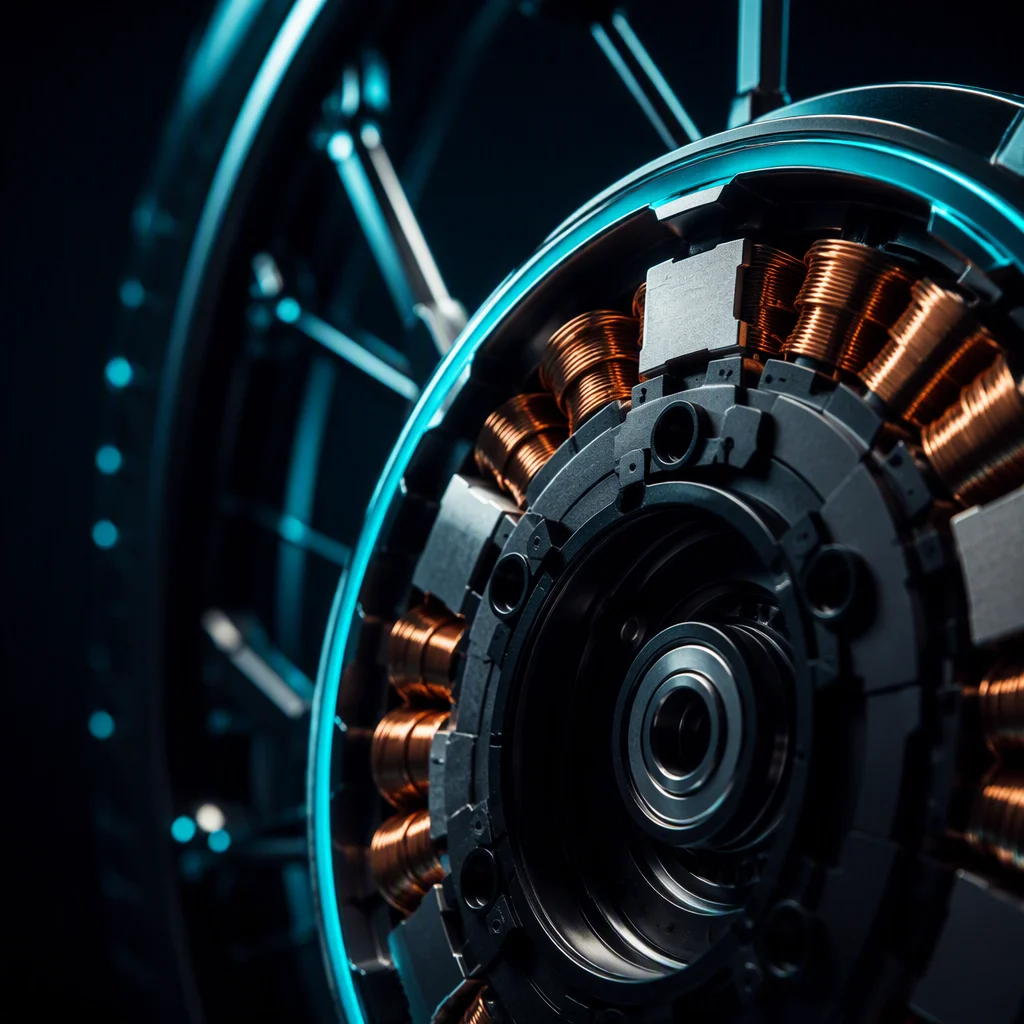
The differential deserves its own explanation, because it is the component buyers most often overlook in an RFQ. Without one, both rear wheels are forced to turn at the same speed, so the inside wheel scrubs through every corner. On a light vehicle that is merely inefficient; on a 500 kg trike working tight urban routes it destroys tyres and stresses the axle. A differential lets the inside wheel rotate slower, and its presence is one of the clearest signals of a platform engineered for commercial duty rather than adapted from a bicycle. Our differential explainer covers the mechanism and the inspection points.
Spec Sheet: What to Put in Your RFQ
An RFQ that specifies only a wattage will produce quotes that are not comparable. Specify these items instead, and the quotes will be:
- Rated motor power and whether the figure quoted is continuous or peak.
- System voltage (60V or 72V) and battery chemistry (NMC or LFP) with capacity in Ah.
- Hub winding type — high-torque or high-speed — and the controller supplied as its matched pair.
- Differential: present, integrated into the rear axle, or absent.
- Governed top speed and whether the governor is settable for other markets.
- Payload rating for the destination market, remembering that EU L2e classification applies the 300 kg figure including the driver while non-EU markets accept the full 500 kg.
- Warranty terms on the drivetrain specifically — windings, bearings, gear teeth and the differential lock.
Two commercial variables belong in the same conversation. Our cargo trike platform carries an MOQ of 50 units with a 15–30 day lead time, and box customisation adds 10 days. Because the box is engineered per order rather than picked from a catalogue, the drivetrain specification and the box specification should be settled in the same round of discussion. The cargo tricycle OEM guide walks through the full quotation process.
Choosing the Right Rating for Your Market
Two regulatory facts change the answer in different regions, and both are frequently mis-stated by sellers unfamiliar with the market they are quoting into.
In the European Union, L2e vehicle classification caps cargo tricycle payload at 300 kg including the driver, and a machine at the 1200W tier cannot be sold as an EPAC. Buyers should expect a compliance package rather than a verbal assurance. Our EU and US certification comparison and tricycle regulation guide map the classes and the documentation each requires.
In non-EU markets — Southeast Asia, Africa, South America and much of the Middle East — the full 500 kg rating is available and the regulatory burden is lighter, which is why higher-torque configurations sell in volume there. The same physical platform serves both, with the payload rating and the compliance documentation adjusted to the destination.
Neither fact should be discovered after the order is placed. A supplier who cannot state which class your vehicle will land in, and produce the paperwork for it, has not engineering-led the quotation.
How to Evaluate a Motor Before You Commit
Because crate weight makes air freight impractical for a sample trike, evaluation usually happens before shipping rather than after. Three checks give a buyer real evidence:
- A loaded road test. Ask for a test run with ballast at or near the rated payload, on a representative gradient. A factory that will demonstrate the vehicle loaded is showing you the drivetrain under the conditions that matter.
- Close-up inspection of the differential axle. This is where the payload torque actually goes. Weld quality, bearing seating and axle specification are visible on a video call and are the fastest way to judge build standard.
- A live line walkthrough. Seeing the assembly line, the motor and controller pairing process and the finished-bike test area tells you more about consistency than any brochure.
All three are available on request, and we consider them part of the quotation rather than an exception to it. The wider question of how to assess a factory at all is covered in our supplier evaluation checklist.
Spec the Right Motor for Your Route
The rule that resolves most motor decisions is simple: spec the grade you actually have, not the grade you wish you had. A trike that finishes every shift is worth more than one with a larger number on its datasheet that spends the afternoon in thermal protection.
Concretely — flat urban routes under 60 km per shift point to the 800W tier on 60V NMC. Mixed routes with moderate grades and daily loads near the payload ceiling point to the standard 1000W build. Routes that work a trike hard every day, on sustained climbs, with heavy loads and fast cycle accumulation, justify the 1200W tier on 72V LFP plus its heavier controller.
If you are unsure which tier fits, describe the route: distance per shift, typical and peak load, the steepest sustained grade, and how many shifts per day the vehicle will run. Those four numbers determine the answer more reliably than any specification sheet. Our payload capacity guide, tricycle vs e-bike comparison and cost breakdown guide take the analysis further, and the spare parts guide explains how to plan consumables for the drivetrain over a fleet's service life.
Spec the Right Motor for Your Route
Tell us your payload, terrain grades, and daily route distance. We will spec the motor rating, controller, and pack combination, with grade test data and a sample unit before mass production.
