
The tilting electric trike is the platform buyers ask for when they want motorcycle-style cornering without the motorcycle risk profile. Instead of a rigid frame that leans nothing and turns like a delivery cart, a tilting trike lets the whole chassis lean into a bend, two wheels on one axle, one on the other, all three planted on the asphalt, and it locks upright when the rider stops. For an OEM buyer, the tilting platform is a distinct product line from the rigid cargo trike, with its own linkage, its own test procedure, and its own certification path. This guide covers what actually makes a leaning three-wheeler corner, how the mechanism is built, how sparse the supplier market really is, the drivetrain and battery figures you can spec against a real factory, and the OEM checklist that separates a shop that can engineer a leaning chassis from one that merely rebadges a rigid frame.
What Is a Tilting Electric Trike?
A tilting (or leaning) three-wheeler keeps three wheels on the ground while the body leans into a turn, typically 20–30 degrees, through a pivoting front or rear axle. Two layouts dominate, and the one you choose changes how the chassis behaves:
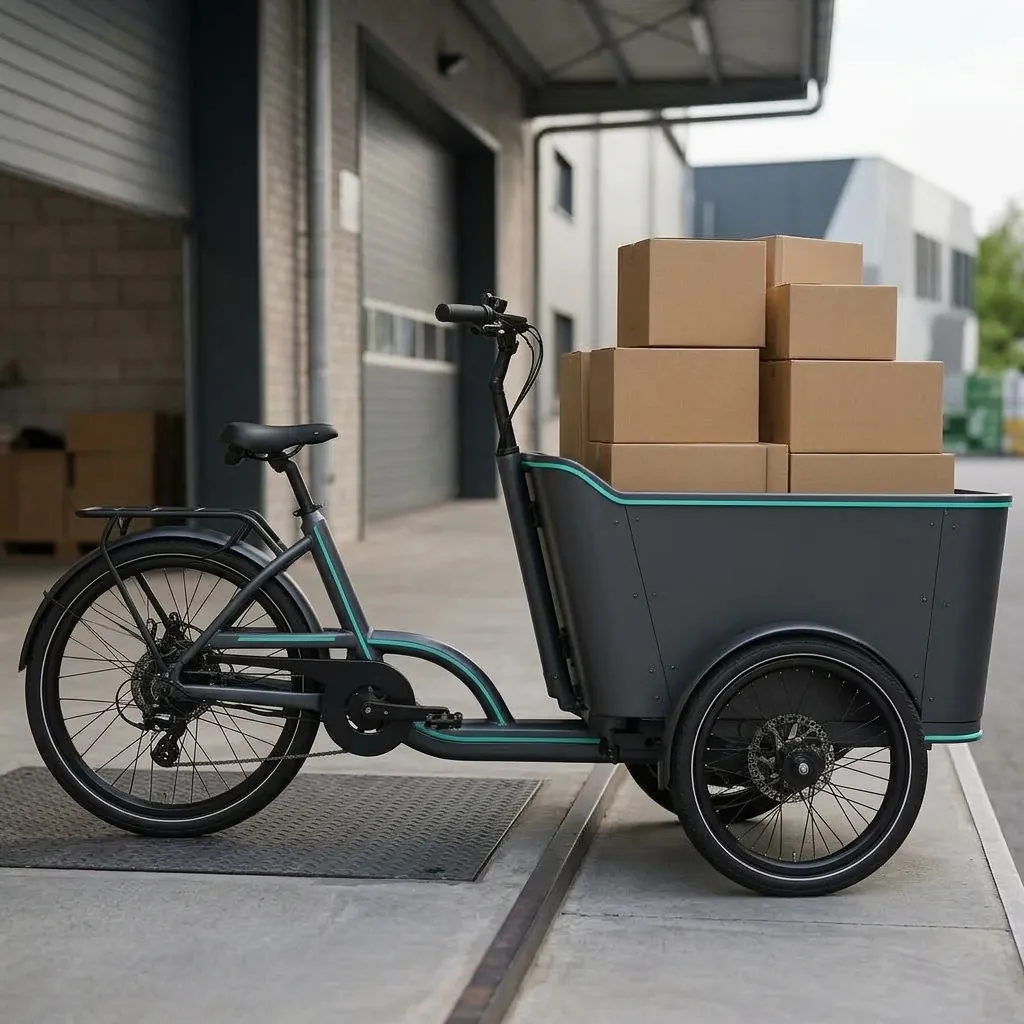
- Delta layout (two wheels at the rear, one at the front) . The leaning work happens on the axle opposite the steering head. This is the layout our cargo platform uses, and it is the most common because the cargo box or seat sits between the two load-carrying wheels, which spreads payload without a leaning front end.
- Tadpole layout (two wheels at the front, one at the rear) . The front axle carries the parallelogram linkage and does all the steering and leaning work. This is the classic motorcycle-replacement configuration, and it is what most dedicated "leaning trike" suppliers build, because the front end leans and the rear stays put.
The defining feature is not the wheel count, it is the leaning mechanism. A rigid trike has three fixed wheels; a tilting trike has three wheels plus a hinged chassis. That single difference is why the two categories ride completely differently, and why the comparison with conventional e-bikes and scooters matters when you spec a fleet. The general stability and ride-position questions buyers raise first are covered in our tricycle vs e-bike guide. For a genuinely leaning machine you also need the differential / torque-split logic explained in our differential guide, because a leaning tadpole axle will scrub range hard without it.
Why the Tilting Trike Category Is Growing
Search interest in leaning three-wheelers from Chinese factories climbed through 2026, and the demand pattern is easy to read:
- Riders want motorcycle feel without motorcycle risk . A leaning chassis corners like a bike, which matters on long delivery shifts where a rigid trike feels like driving a box.
- No-license classes . In most US states a 750W, 20 mph tilting trike with pedals qualifies as a Class 2 e-bike, and in the EU a 250W version rides the EPAC line. The same regulatory map that governs rigid trikes applies here; the full matrix is tracked in our US and EU regulation guide, with the certification splits in our EU vs US certification guide.
- Fleets that mix speed and stability . Last-mile couriers, campus patrol, and rental operators all want a vehicle riders enjoy, because rider retention and daily throughput both improve. The economics of small electric platforms are quantified in our cargo delivery fleet guide.
The cultural driver behind the whole three-wheeler wave, cheap, practical, fun vehicles replacing trucks and cars, is documented in our why Americans love the e-tricycle analysis, and the tilting trike is the corner of that wave aimed at riders rather than load haulers.
How the Tilting Mechanism Works
At the heart of a leaning trike is the axle linkage, and the quality of that linkage is the quality of the whole vehicle. Three elements decide whether it feels planted or wallowy:
- Parallelogram linkage . Two arms connect the leaning wheels to the chassis so they tip in parallel. The linkage converts lean angle into steering while keeping both tires loaded, which is what lets the trike hold a corner at a speed a rigid frame cannot safely carry.
- Dampers . Hydraulic or elastomer dampers control the lean rate so the chassis does not flop side to side. Damper tuning is the hardest part to get right in production, and it is where cheap overseas builds most often fall over: too soft and it wallows, too hard and it loses the whole benefit of leaning.
- Standstill lock . The most important safety feature. Most designs lock the lean mechanism below roughly 5 km/h so the rider never has to put a foot down at a stoplight. The lock must fail safe (locked), which is a specific QC checkpoint in the OEM checklist below.
Because the linkage carries real loads through hundreds of thousands of lean cycles, ride-quality and durability overlap heavily with suspension design, the same trade-offs covered in our cargo trike suspension guide, applied here to the leaning axle. Tire choice on the two load-bearing wheels also matters more than on a rigid build, which is why the tires guide is worth reading before you spec tread and load index.
Tilting Trike vs Rigid Trike vs Motorcycle
An honest comparison for a buyer deciding between three platforms:
| Attribute | Tilting trike | Rigid trike | Motorcycle |
|---|---|---|---|
| Standstill stability | Locked upright, no foot down | Inherently stable | Rider balances |
| Cornering feel | Leans like a bike | Flat, understeers | Full lean |
| Payload (EU / non-EU) | Lower, favors rider | 300 kg / 500 kg | Minimal |
| Speed class | Class 2 / L1e–L2e | Class 2 / L2e | Full L3e+ |
| License needed (US) | No (Class 2) | No (Class 2) | Yes |
| Learning curve | Minutes | Minutes | Weeks |
| FOB price (China OEM) | $1,250–1,800 | $1,250–1,550 | N/A |
The rule of thumb: rigid trikes win on static payload and simplicity, motorcycles win on speed and range, and tilting trikes win on the middle ground, rider comfort, cornering confidence, and urban throughput. For last-mile and rental duty that middle ground is exactly where the volume is moving, and it is why the category keeps attracting OEM entrants.
Drivetrain and Battery Specs for Tilting Trikes
You can spec a leaning build against the same real platform figures that run our rigid three-wheelers, which keeps a single spare-parts and service structure across the whole fleet:
- Motor: 800W / 1000W / 1200W brushless hub . The same brushless hub-and-differential drivetrain used on our cargo trike, driven at 60V or 72V. A hub motor sits in the wheel and avoids a drive shaft through the leaning linkage, which is cleaner on a tadpole build than a mid-drive. The torque and efficiency trade-off between hub and mid-drive is laid out in our hub vs mid-drive guide, and the power-to-payload math in our motor power guide.
- Battery: 60V 32Ah NMC (1.92 kWh) or 72V 40Ah LFP . A swappable lithium pack with a heavy-duty BMS. LFP is the desert and tropical recommendation because it holds up better at sustained high ambient temperature; the chemistry trade-off is explained in our battery technology guide and 60V vs 72V guide.
- Range and speed. 50–80 km per charge at 25–35 km/h under a 200 kg load, with a 6–10 hour charge time at 5A. That is enough for a 30–60 km daily route on a single pack.
- Brakes . Hydraulic disc up front (the leaning wheel carries the load through the corner) with dual drum at the rear plus a parking brake. The sizing logic is in our brake systems guide.
Tire spec follows the same platform rule: 3.00-12 front and 3.75-12 rear on a delta build, sized to the load rating you actually plan to carry rather than the unfilled brochure number.
OEM Checklist When Commissioning a Tilting Trike
Buying leaning trikes in volume requires verifying things a rigid-frame order never exposes:
- Lean-cycle test data . Ask how many lean cycles the linkage and dampers are rated for (a working figure is 100,000+ cycles) and request the test report. The factory that cannot produce one has not tested it.
- Standstill lock fail-safe . Confirm the lock defaults to locked on power loss. This is safety-critical, not a convenience feature.
- Frame and weld QC . The leaning chassis sees higher cyclic loads than a rigid frame. The same weld inspection and e-coat / powder-coat rust protection that protect the rigid platform apply, as documented in our manufacturing process guide.
- Certification, UL 2849 for the US Class 2 path, EN 15194 for the EU EPAC path, and eMark where L-category rules apply. The full matrix and where the lines sit is in our EU vs US certification guide.
- Spares and service . Dampers, linkage bushings, and lock actuators are consumables. Confirm the spares pipeline before committing, using the checklist in our after-sales and spare parts guide.
The broader OEM process, tooling, samples, third-party inspection, deposit structure, is the same one documented in our cargo trike OEM guide, applied to the tilting platform. On price, a tilting build lands at about $1,250–1,800 FOB with a 50-unit MOQ, and a first custom run runs 30–45 days because tooling and pre-production samples are made before mass production.
Who Is Buying Tilting Trikes
The buying segments map cleanly onto the category's strengths:
- Last-mile couriers . Riders cover 40–60 km/day and want cornering confidence at 25–35 km/h; the throughput case is in our courier and parcel guide.
- Rental and tourism fleets . Resort and beach-town operators report leaning trikes rent faster because they are fun; the fleet model is in our tourism rental guide.
- Commuters and mobility riders . Riders who want the stability of three wheels without the boxy feel; the rider-facing considerations are in our safety features guide.
Production capability is the gate on all of these segments. A factory that welds rigid frames but has never built a leaning chassis will struggle with the linkage tolerances, and that is exactly the stage an OEM buyer should audit before tooling. The assembly and QC stages that separate a serious platform from a rebadge are walked through in our manufacturing process guide.
Spec Your Tilting Trike Program
A working starting spec for a US Class 2 tilting trike: 750W brushless hub with differential, 60V 32Ah NMC pack, tadpole layout with parallelogram linkage and hydraulic dampers, a fail-safe standstill lock, hydraulic disc front brake, a 100,000-cycle linkage rating, and tires to a load index that clears your real payload, built toward UL 2849 with UN 38.3 batteries. That build competes directly with motorcycle-style commuters at roughly a third of the price, which is the same value story that made the rigid three-wheeler category explode. The reward for getting the mechanism right is a platform riders genuinely prefer, and that is what converts a single container inquiry into a repeat program.
Spec a Tilting Trike Program
Tell us your target market, speed class, and volume plan. We will spec the tilting platform, drivetrain, lock mechanism, and certification package for your program.
