
A hydraulic tipper e-tricycle is a three-wheeled cargo platform fitted with a powered dump bed. Instead of shoveling a 150–500 liter box by hand, the rider presses a switch, the bed lifts to a 45–55 degree angle, and the load empties in about thirty seconds. On our export builds the same platform that carries the standard cargo box simply swaps the fixed bed for a self-dumping one, so you keep the drivetrain, the payload rating, and the service network, and you add one powered cylinder. This guide covers how the hydraulic tipper works, the real platform specs behind it, the duty cycles that justify the option, and the OEM configuration choices when you order a fleet.
What a Hydraulic Tipper E-Tricycle Is
A tipper trike is a cargo trike with a powered dump bed. The export configuration we spec:
- Bed . Steel or aluminum box from 150 to 500 liters, hinged at the rear (or on one side for side-dump variants) so the front of the bed can lift clear of the chassis.
- Lift system . A 12V or 24V electric hydraulic pump driving one or two lift cylinders. Peak pump draw is roughly 0.8–1.5 kW for a few seconds per cycle.
- Control . A handlebar-mounted switch or a wired remote; the bed raises, dumps, and lowers under power, then locks mechanically for travel.
- Manual override . A hand pump lets the operator raise or lower the bed if the electric system fails, so a dead pump never strands a load.
It is a different machine from a drop-side box, which opens its walls for manual unloading. The comparison matters at spec time, and we break it down below.
Why Powered Dumping Pays for Itself
The tipper option recovers labor in minutes per load, which compounds fast on a daily route:
- Manual unloading . Shoveling a 400 liter bed of sand, soil, or manure takes one person roughly 20–40 minutes, plus the strain and the risk of shovel damage to the bed liner.
- Hydraulic dump . The same load empties in about 30 seconds. On a 6-load day that is 2–4 hours of labor recovered per day, per vehicle.
- Crew impact . Municipal leaf and green-waste routes often run two-person crews because loading and unloading both need hands; a tipper trike lets one person run the route. The route economics are detailed in our waste collection guide.
The option price on a tipper build is typically $150–300 over a fixed box, so the payback is measured in days, not months, on any route that dumps more than a couple of loads per day.
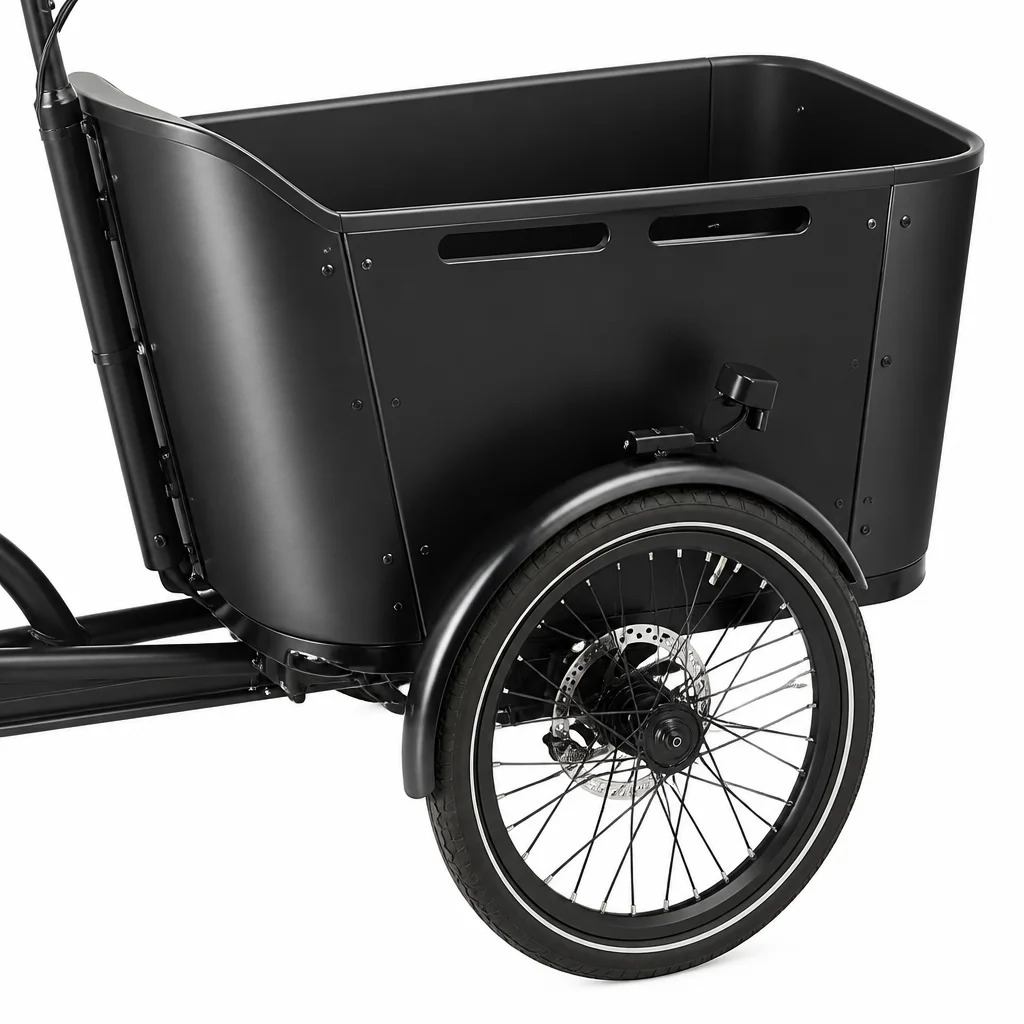
The Drive and Hydraulic System on Real Export Builds
Hydraulic tippers ride on the same platform as our standard cargo tricycles, so the drivetrain is proven and the parts are shared:
- Motor and differential, 800W for flat light duty, 1000–1200W with a differential for loaded ramps and soft ground. The power-to-payload logic is in our motor power guide.
- Battery. 60V 32Ah NMC (1.92 kWh) or 72V 40Ah LFP for the heavier builds; LFP is the tropical-market recommendation for its cycle life. The sizing trade-off is covered in our 60V vs 72V guide.
- Range and charge, 50–80 km carrying a 200 kg load, 25–35 km/h top speed, and 6–10 hours to charge on a 5A charger.
- Pump draw . A full raise-and-lower cycle draws roughly 2–4 Ah from the pack. On a 60V 32Ah battery that is hundreds of cycles between charges, so the tipper is not the range problem on a busy route.
For operators running multiple vehicles, the charging and battery-rotation plan follows the same pattern as any working fleet, covered in our fleet charging guide.
Tipper vs Drop-Side vs Fixed Box
Three box architectures answer three different unloading problems:
| Box type | How it unloads | Best for | Price impact |
|---|---|---|---|
| Hydraulic tipper | Powered bed lift, 30s dump | Bulk aggregates: sand, soil, manure, rubble | +$150–300 |
| Drop-side | Walls open, manual shovel | Bagged goods, mixed loads, hand unloading | +$50–100 |
| Fixed box | Top or rear access only | Courier parcels, protected freight | Base price |
Drop-side boxes remain the right choice where loads are bagged or palletized and manual unloading is fine, the configuration detail is in our courier and parcel guide. Fixed boxes win for parcel and food duty where the load must stay covered. But when the cargo is measured in shovelfuls, the tipper is the only architecture that removes the shovel from the job.
Where Tipper Trikes Earn Their Keep
Four duty cycles dominate tipper trike sales, and each is a documented use case on this site:
- Farm and ranch . Feed sacks, manure, harvest bins, and field cleanup; the farm duty cycle is covered in our farm and ranch guide.
- Construction . Sand, gravel, rubble, and site cleanup where a full dump truck is overkill; the job-site math is in our construction trike guide.
- Municipal and sanitation . Leaf collection, green waste, brush, and street sweepings; the municipal route model is in our waste collection guide.
- Landscaping . Soil, mulch, and excavated material on residential jobs; the landscaping duty cycle is in our landscaping guide.
Winter operators add a fifth use: a tipper trike with a salt or sand spreader body converts a municipal fleet into sidewalk winter service, the cold-weather operating rules are in our winter operation guide.
Specs That Matter on a Tipper Build
A tipper trike is a cargo trike first, but three specs get extra weight because the tipping load shifts weight and stress:
- Rear axle and tires . The 3.75-12 dual rear pair carries the weight transfer when the bed lifts; tire load ratings and tread choice are covered in our tires guide.
- Braking . Hydraulic disc front, dual drum rear, and a parking brake hold the vehicle while the bed is raised; the braking package is specced in our brake systems guide.
- Corrosion protection . Manure, salt, and wet aggregates attack steel; the bed and chassis need e-coat or galvanizing plus a sealed hydraulic system.
Payload stays at the platform rating, 300 kg for EU-classified builds and 500 kg for non-EU export, and the bed volume you choose (150–500 L) should be sized to the load density you actually move, not the biggest box available. The load-engineering rules are in our payload capacity guide.
Safety and Maintenance for Tipping Loads
A raised bed changes the vehicle's center of gravity, so the operating rules matter:
- Dump only on level ground . Never raise a loaded bed on a slope; the load shifts the center of gravity rearward and a slope multiplies the tip-over risk.
- Respect the rated load . The tipper's lift capacity is rated below the chassis payload on most builds; overloading the bed stalls the pump and stresses the frame.
- Parking brake and chocks . Engage the parking brake before raising; the dual-drum rear brake set holds the vehicle while the bed lifts.
- Hydraulic checks . Fluid level, hose condition, and cylinder seals are the tipper's consumables; the inspection cadence is part of our maintenance guide, and the spares pipeline in our after-sales and spare parts guide.
OEM Configuration for Tipper Fleets
When you order tipper trikes in volume, the configurable items are:
- Bed size and material, 150–500 L, steel (standard) or aluminum (lighter, corrosion-resistant for manure and salt duty).
- Lift system . Hydraulic (standard) or manual screw-jack hoist for budget builds and light duty.
- Hinge and tailgate . Rear hinge with drop tailgate, or side hinge for curb-side dumping.
- Finish and branding . Factory color, decals, and logo placement; the branding and sample-approval process is documented in our cargo trike OEM guide.
Orders run from a 50-unit MOQ with 15–30 day lead times, and FOB pricing sits in the $1,250–1,550 range for a mid-spec build. Container planning matters more on tipper builds because the raised-bed geometry affects packing. The loading and landed-cost model is worked through in our China import guide.
Spec Your Hydraulic Tipper Trike
A working starting spec for a municipal green-waste route: 1000W motor with differential, 72V 40Ah LFP pack, 400 L steel tipper bed with drop tailgate, 12V hydraulic lift with manual override, dual rear wheels, and full corrosion protection. One operator, thirty-second dumps, and no shovel. That is the value proposition that pays for the option in the first week.
Spec a Hydraulic Tipper Trike
Tell us your load type, dump frequency, and duty cycle. We will spec the bed size, hydraulic package, drivetrain, and corrosion protection for your operation.
