
An electric cargo tricycle leaves our line at $1,250–1,550 FOB and retails in North America or Europe somewhere between $2,500 and $3,500 depending on spec and market. That spread is the whole reason dealerships exist, and it is also where most first-time importers get the arithmetic wrong. This guide walks through what a dealer actually has to solve: which dealer model fits your market, what the margin stack looks like once freight and duty are in it, how many units really fit in a container, what to stock in year one, and what a factory has to prove before you put its vehicles on your floor.
Why Dealers Are Entering the Category Now
The category is no longer speculative. Buyers are already pulling three-wheeled electric vehicles into farms, vendor markets, courier routes and municipal fleets, and the demand trend is tracked in our 2026 three-wheeler market guide. The cultural reason North American buyers suddenly want a “three-wheeler” at all is covered in our why Americans love the e-tricycle article. From a dealer’s seat, three things make the category worth shelf space:
- No dominant local brand. In most markets there is no incumbent with a locked dealer network, so distribution is still winnable by whoever shows up with inventory, parts and a service bay first.
- Repeating parts revenue. These are working vehicles. Brake pads, tires, inner tubes, controllers and battery packs come back through the service bay on a schedule, not by accident.
- Distinct buyer groups. Farm and ranch operators, mobile vendors, courier fleets and municipal departments each buy for a reason you can sell against. The farm and ranch buying logic is broken down in our farm and ranch guide.
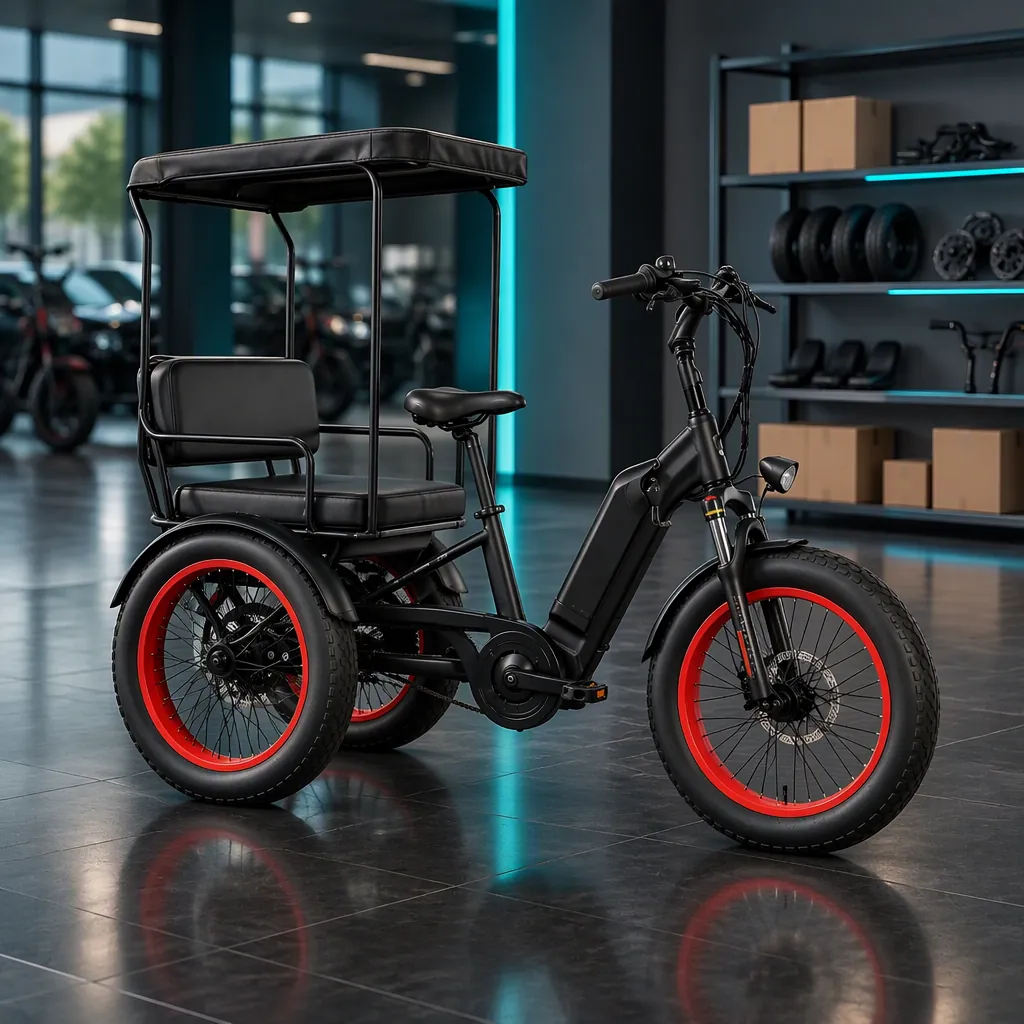
Dealer Models: Retail, Fleet Supply, and Regional Distribution
Choose the model before the first container clears customs, because each one changes your inventory, your service obligation and your pricing power:
- Retail dealer, 10–30 units a quarter, one showroom floor, one service bay, walk-in buyers. Best where e-bike or powersports retail density already exists and customers can be brought in to test-ride.
- Fleet supplier. Sells to courier companies, food delivery operators, rental businesses and municipalities in lots of 5–50 units. Lower margin per vehicle, higher volume, plus a service contract that pays monthly. The fleet buyer’s evaluation process is laid out in our cargo delivery fleet guide.
- Regional distributor. Imports containers, stocks 50–200 units and supplies sub-dealers beneath you. This is a working-capital business: your job is not selling one vehicle, it is turning container inventory several times a year without dead stock sitting in the corners.
The model you pick determines the platform you buy. A retail floor needs a demo-friendly configuration buyers can climb on; a fleet distributor needs a platform that is serviceable in volume, which usually means fewer variants and one common battery format across the range. The build options per platform are compared in our cargo trike OEM guide and the passenger-versus-cargo platform trade-off in our cargo vs passenger platform guide.
The Margin Structure: From FOB to Showroom
Build the stack honestly and the margin survives contact with reality. A representative cargo tricycle, one unit, landed and retailed:
| Cost layer | Amount | Cumulative |
|---|---|---|
| FOB China — 800W hub, 60V 32Ah NMC, 300kg payload | $1,250–1,550 | $1,250–1,550 |
| Ocean freight + insurance (per unit, knocked down, 40HQ) | $60–110 | $1,310–1,660 |
| Import duty (varies by market and HS classification) | $35–100 | $1,345–1,760 |
| Brokerage, port handling, inland delivery | $40–80 | $1,385–1,840 |
| Wholesale price to sub-dealer (distributor step) | $2,150–2,450 | distributor margin |
| Retail price to end buyer (dealer step) | $2,500–3,500 | dealer margin |
Three numbers matter in that table. First, the freight and duty lines add roughly 8–15% on top of FOB — budget for it before you price, not after. Second, if you sit at the distributor step you are working on a double-digit percentage of the wholesale price, which only survives if you move volume; if you sell at retail you earn a materially wider gross margin but you carry the showroom, the technician and the demo unit. Third, the certification documents that legally let you sell — and that protect this margin — are not free: the compliance route per market is mapped in our EU vs US certification guide, and the vehicle classes you may legally sell in each US state or EU member are covered in our tricycle law guide.
Import and Landing Cost: The Container Math
First-time importers almost always underestimate the non-vehicle costs and overestimate how many units fit in a container. What the export desk actually works with:
- Sea freight, FCL. Full container load in a 20GP or 40HQ. A 20GP holds roughly 42 partially disassembled units (handlebar off, pedals unthreaded, front wheel removed); knocking a cargo trike down further trades a lower landed cost per unit for more assembly labour in your own warehouse.
- Sea freight, LCL. Consolidation is available for trial orders in the 10–20 unit range, which is the sensible way to test a market before committing to a container. Transit runs roughly 22–35 days port to port depending on route.
- Air freight. 5–8 days door to door. Realistically limited to samples, trade-show units and urgent top-ups — weight caps the load and per-kg cost runs several times sea freight.
- Battery paperwork. Every lithium shipment moves under a UN 3480 Class 9 dangerous goods declaration with MSDS and UN 38.3 test summary in the shipping documents. Missing this is the single most common reason a container sits at port.
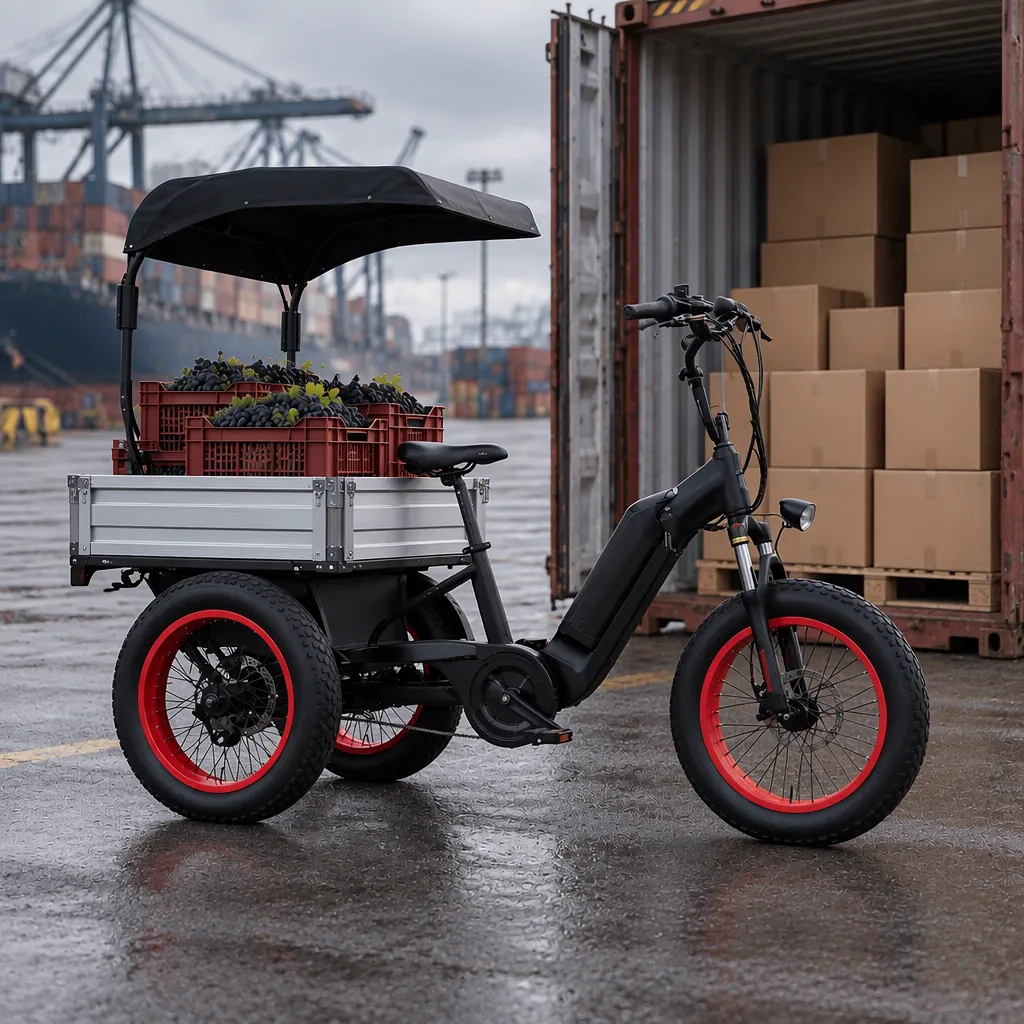
The packaging standard behind those units is worth asking about too, because it decides how much arrives sellable: 7-layer BC-flute master cartons rated at 1,200 kPa burst strength, 30mm moulded PE foam at 85% frame coverage, a heat-sealed moisture barrier bag with desiccant for sea transit, and a steel-reinforced 1,100 × 1,100mm pallet rated to 1,200kg static load. The full export walkthrough, including HS classification and customs treatment, is in our China import guide, and payment and trade-finance mechanics in our OEM buying guide.
Inventory Planning: What to Stock in Year One
Stock mix matters more than stock size in the first year. A working starter plan for a retail dealer or light distributor:
- One hero model, one price anchor. Carry a 1000W cargo trike as the demonstration unit and a lower-spec 800W variant as the price anchor on the floor. Two platforms, not six — every additional variant multiplies your spare-parts commitment.
- Demo units that actually get ridden. A trike on the floor that cannot be test-ridden is a photograph. The buyers who convert fastest are the ones who drive one, which is why the demo unit should be the highest-spec build you carry. Mobile vending operators are a particularly fast-converting early niche, see our mobile vending guide.
- Spares from day one, not day ninety. One charger per unit, plus brake pads, inner tubes, tires, a couple of controllers and BMS units. Parts availability is what separates a dealer from a warehouse. The parts pipeline a factory should contractually guarantee is covered in our after-sales and spare parts guide.
- Battery format discipline. Standardise on one voltage and capacity across your range (60V 32Ah is the workhorse, 72V 40Ah LFP for heavy-duty) so one charger, one spare pack and one service procedure cover the floor. Mixing voltages in year one doubles your parts wall for no sales benefit.
Spare Parts and Service: The Revenue You Keep
A tricycle’s service profile sits closer to a light motorcycle than a bicycle: brake pads, tires and controller diagnostics on a schedule, with battery packs cycling out after several hundred charge cycles. That is a predictable revenue stream if the dealer builds the capability early:
- Training. Have the factory train at least one technician per order and supply service documentation. The routine procedures a dealer needs are documented in our maintenance guide, and the brake-specific service intervals in our brake systems guide.
- Warranty split, in writing. Agree the warranty boundary and the parts-replacement process before signing, not after the first claim lands. Ask how a failed controller or BMS is handled: replacement unit, credit against the next order, or field repair kit.
- Diagnostics as a service. Controller faults, throttle response and display errors are the calls that fill a service bay. A dealer who can read a fault and swap a controller in an hour owns the local market for that vehicle class.
- Charging advice as an upsell. Most new owners under-charge or over-charge. Getting the charging routine right — charger sizing, charge window, storage state of charge — extends pack life and gives you a reason to see the customer again. The detail is in our charger guide and battery pack guide.
OEM Selection: What a Factory Must Prove
The margin above only exists if the vehicles stay on the road. When you evaluate a factory, ask for evidence rather than brochures:
- Show the line. Actual production-floor photos and video walkthroughs of the line your order will use. If a source or process cannot be shown, treat it as absent from the quote.
- Quality gates with numbers. Incoming material sampled to AQL 2.5 Level II, lithium cells sorted for internal resistance and open-circuit voltage, safety-critical fastener torque verified and logged per unit, and a full dynamometer plus water-spray cycle before cartoning. Vague “strict QC” language is not a gate.
- Test equipment in house. A motor dynamometer with efficiency mapping, a battery thermal chamber, a spray chamber and a brake test bench. In-house equipment means the data comes from testing your batch, not from a generic report.
- Sample before volume. Order one demo unit and one unit you are willing to strip. Ride the demo, open the second. The sample is the specification — written approval on it is what protects you when a later batch differs.
- Commercial terms that fit your cash cycle. Standard is 30% deposit with order and 70% before shipment, L/C at sight for larger orders. Production runs 15–30 days after deposit for a standard OEM order; sample orders ship in 7–15 days from stock or 12–18 days custom-branded. Minimum order is 50 units for custom branding, 10 units for unbranded stock models.
The 90-Day Launch Plan
A realistic sequence for a dealer opening the category, run as three sprints rather than one leap:
- Days 1–30. Lock the vehicle class and the certification route for your market. Order two samples — one demo, one to strip — and verify the margin stack against your real landed cost, not a spreadsheet estimate.
- Days 31–60. Place the first container order, arrange technician training, and pre-sell into the strongest local niche: farm suppliers, vendor markets or courier companies. Pre-selling before the container lands is what turns inventory into cash instead of floor space.
- Days 61–90. Receive, assemble, test-ride and deliver the first units, then collect reviews from those buyers and use them to sell the second container. The pre-sell playbook for fleet and rental buyers is in our rental operator guide, and the fleet financing structures in our fleet financing guide.
Dealership economics in this category are not complicated, but they are unforgiving of skipped steps. The dealers who last are the ones who ordered a sample before a container, stocked parts before they needed them, and picked a factory that would show them the line rather than describe it.
Start Your E-Tricycle Dealership
Tell us your market, the vehicle classes you want to carry, and your target price points. We will share the distributor margin structure, sample program, and the certification documents your showroom will need.
