
Bread is a morning product. A weekday bakery makes its money in the hours between 4 a.m. and 10 a.m., getting fresh loaves and pastry to cafés, restaurants, corner shops and breakfast counters before the day starts. That band is narrow and unforgiving. A loaf that arrives cold is a loaf that does not sell. An electric cargo tricycle fits the window exactly: quiet enough for early streets, cheap enough to run twice a day, and nimble enough to thread a busy café quarter. This guide breaks down the box design, the payload and route math, how to keep pastry presentable, and how to buy one as an OEM program.
The Fresh-Delivery Problem: Bread Is a Morning Product
Fresh bakery delivery is a race against time and temperature. A wholesale round needs to hit twenty cafés with product still warm or at least not stale, and most bakers do it in a van that is oversized, thirsty and hard to park. A trike runs on $0.30–$0.60 of electricity per 100 km, needs no commercial license at the low-speed class, and parks where a van cannot. The fleet economics that decide when this makes sense are modelled in our cargo e-bike and e-tricycle fleet guide.
Because a bakery round is dense and short, a trike can do in a single morning what a van struggles to do in two. And the early, quiet, electric start is an advantage on residential streets where engine noise is unwelcome.
Box Design for Bread, Pastry and Café Supply
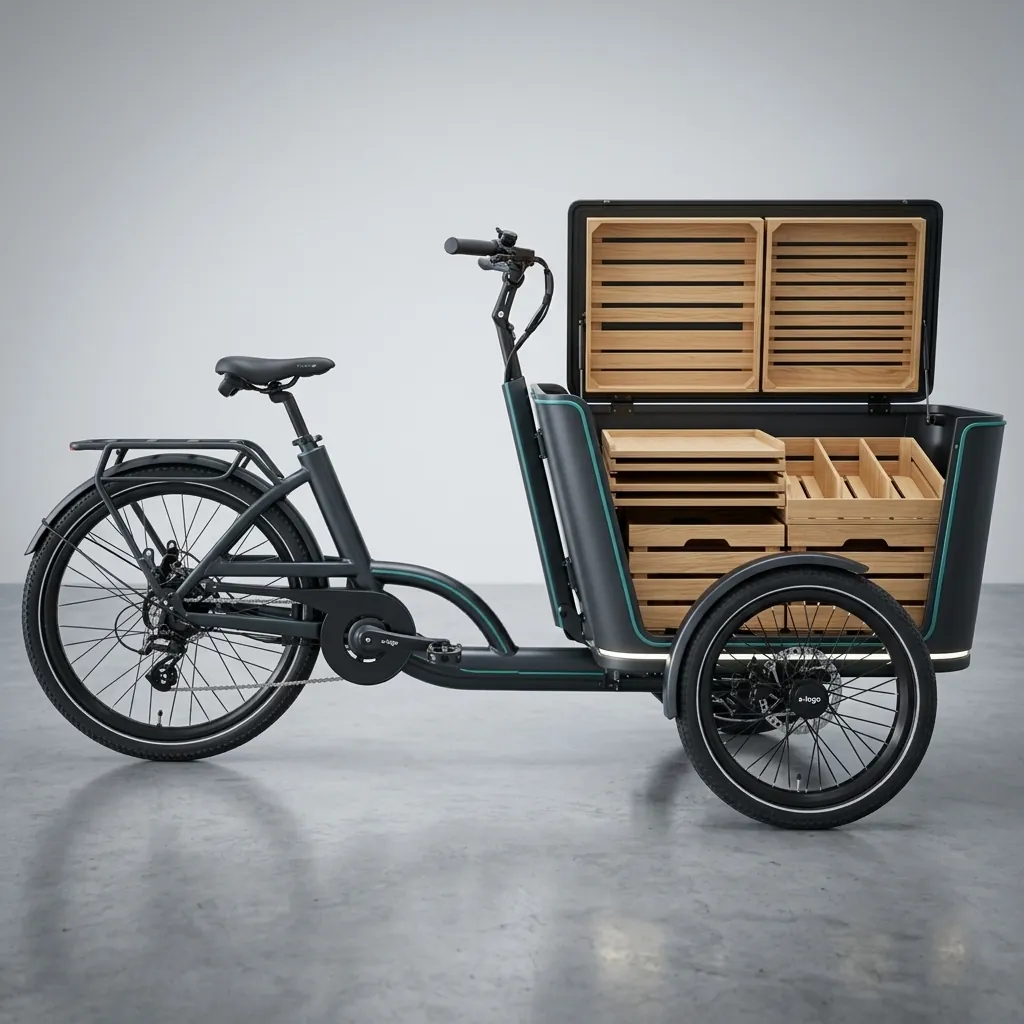
The box on a bakery trike supports the product instead of letting it slide. The standard build is stackable flat trays or bread crates with a non-skid floor, vertical dividers for pastry sleeves, and a separate compartment for drinks and chilled items if the route includes café supplies. A closed canopy or sealed box keeps the load dry and looks professional on a commercial street. The box options, drop-side, canopy, or enclosed, are detailed in our canopy guide.
Payload and Route Math for a Bakery Round
Bread is light, so a bakery route is limited by box volume and stop count more than by weight. A 300 kg payload (EU class) or 500 kg (non-EU) comfortably carries a full morning round of wholesale loaves and pastry, plus a stack of café supplies.
| Configuration | Payload | Capacity per Round | Best Use |
|---|---|---|---|
| EU-class bread crate box | 300 kg | ∏ 20–30 wholesale stops | Café and shop rounds |
| Non-EU heavy build | 500 kg | ∏ 30–40 stops + stock | Bakery + café wholesale |
| Tray + chilled compartment | 300 kg split | Bread + cream cakes + drinks | Mixed patisserie round |
Range is the second constraint. A loaded trike rated for 50–80 km covers a full double-shift bakery round, and the 60V vs 72V choice is explained in our 60V vs 72V comparison.
Motor and Torque for Loaded, Start-Stop Streets
A bakery trike stops at every shop on a tight commercial quarter, so it needs torque off the line with a full load rather than top speed. The difference between an 800W and a 1200W hub motor on a loaded start-stop route is covered in our cargo tricycle motor power guide. Hub motors win this category on cost and serviceability because they have fewer moving parts, the trade-off set out in our hub vs mid-drive comparison.
Battery, Charging and the Double-Shift Round
A bakery that runs a pre-dawn wholesale round and a warm second café round needs energy for two delivery windows without a long midday recharge. The standard build opens with a 60V 32Ah NMC pack, or a 72V 40Ah lithium iron phosphate (LFP) pack for hotter climates. LFP holds its capacity across more recharge cycles and shrugs off the shop-floor heat common in warm bakeries. Both feed through a heavy-duty BMS that protects the cells during the hard, high-current stop-start draw. A loaded trike at 200 kg carries a real range of 50–80 km at a top speed of 25–35 km/h, which is enough for a full morning round plus a short second delivery window.
Recharge time is the hidden constraint on a two-shift schedule. A standard 5A charger refills a drained pack in 6–10 hours, so a second swappable battery is the cheapest way to cover two rounds without a midday charge stop. That pair of packs plus a consistent charging point at the bakery is the reliability question every fleet operator has to solve, the fleet charging guide lays out charger ratios and swap economics for exactly this kind of dense, two-shift route.
Temperature and Handling: Keeping Pastry Presentable
Pastry sells on appearance. A sealed box with a non-skid floor and dividers stops cakes and buns from sliding, and a small insulated compartment keeps cream, cold drinks and chilled items at the right temperature for the length of a morning loop. The passive vs active cooling trade-offs for a temperature-sensitive load are covered in our cold-chain guide, and the insulated-box integration approach for delivery is detailed in our food delivery guide.
The Economics of a Bakery Trike
Bakers run on narrow margins and tight times. Replacing a morning van with an electric trike cuts energy cost by roughly twenty times, removes the commercial-driver requirement, and allows a second afternoon round without a second vehicle. The tire and brake wear on a heavily loaded stop-start route is the main consumable, the tire guide covers load ratings and the brake systems guide covers stopping distance under load.
Specify a Bakery Trike as an OEM Program
Confirm the MOQ . Typically 50 assembled units or 100 with a custom crate layout and livery. Then run a sample on a real morning round: load the actual loaves and pastry you carry, run the actual route, and verify the box keeps product upright and dry, the trike starts from a stop with a full load on the worst grade, and the range survives a second trip. The sample strategy, lead time and payment terms are in our OEM buying guide, and first-container planning is in the importing guide.
Spec a Bakery Cargo Tricycle
Tell us your stops per morning, box layout and whether you need a chilled compartment. We will quote the 800W–1200W cargo tricycle line with bread crates, tray dividers and canopy options, FOB China.
